![]() |
| My paviour great grandfather, wearing a waistcoat & moustache, next to the bearded man with the tar barrel. |
I write books. I live with my artist husband, Alan Lees, in a 200 year old cottage in Scotland.
![]() |
| My paviour great grandfather, wearing a waistcoat & moustache, next to the bearded man with the tar barrel. |
![]() |
| 19th century ivory miniature of Robert Burns |
I've written so much about Robert Burns that you'd think I'd have seen his ghost by now, but I never have. I suspect if I did see him, he would look nothing like the above romanticised image, although as a young man he was described as very dark and 'spare' - slim without being skinny - with fine dark eyes. He liked to dress fashionably when he could, so I reckon he'd have been an attractive young man. His wife Jean Armour certainly thought so.
Even before I knew much about her, I had a soft spot for Jean. I thought she had been hugely neglected over the years by later commentators. Catherine Carswell, in her biographical novel of Burns described her outrageously as a 'young heifer' while even the present day Burns organisations never seem to make much of a connection between the wee song bird on his self designed seal, with the motto 'wood notes wild' - a phrase he always associated with the wife he loved. She had the finest singing voice in the district.
I've never seen Jean's ghost either, although I would have been very happy to meet her. I think she was a woman of great character, with a wonderful sense of humour. However, something happened when I was researching my novel about her, The Jewel, that certainly gave me pause for thought.
I had been researching Jean, her milieu, her marriage, her life story, for a long time before I ever plunged into writing The Jewel. That's the way it works for me. I try to immerse myself in a time and place for as much as a year beforehand (sometimes more) and then when I get down to telling the story, I'll find out even more things that I didn't know I didn't know, and have to research those too. It's absorbing but exhausting.
For a time, it seemed as though there was nothing but Jean Armour in this old house which, when you think about it, would have been built while Jean was still alive. She died in 1834.
One night, my husband had got up to go to the loo. It adjoins the room I use as my office, just off our bedroom. I woke up too, as you do, so I saw him come back through the bedroom door, halt for a moment or two, say 'oh!' in a puzzled tone of voice, and then get back into bed.
'What's the matter?' I asked.
'I could have sworn I saw a woman standing in the doorway,' he said. 'At first I thought it might be you, but she was wearing strange clothes, a long skirt, a shawl, a cap on her head.'
'The following morning, I showed him a picture of Jean Armour. 'That's her' he said.
I must admit I was a bit sad that I hadn't seen her myself. But we were immersed in her, so perhaps it's not surprising that my 'thought forms' had suddenly become visible to my poor husband! It's maybe just as well I don't write horror stories ... yet.
![]() |
| Jean and I |
| Culzean Castle |
He and a couple of colleagues had taken a party of scouts to camp at Culzean Castle for the weekend. This was a local event and they were pretty close to home, which was just as well, because the wife of one of them was in the advanced stages of pregnancy. They had, however, hiked there, carrying backpacks, and had no other means of transport.
In the early hours of the morning, a message came through to the Castle that she had gone into the early stages of labour. This was before the days of mobile phones, so it was a landline message. Not wanting to inconvenience anyone further, the husband decided that since it was a fine summer night, he could easily walk the few miles back to the town of Maybole, to pick up his car. Our friend said that since there was still a supervisor left behind for the youngsters he would keep him company along the road and come back to the campsite in the morning.
If you don't know this part of the world, there is a road running to the west of the A77, closer to the sea. Head south and it will go to Maidens and will ultimately rejoin the main road south at Turnberry where Mr Trump has his hotel. Northwards, it will take you to Ayr, but a few miles north of Culzean, at a place called Pennyglen, you can branch off towards Maybole. At night, it's a quiet rural road, and certainly the quickest way back to the town.
Remember, this is an old road, with a violent history. Or at least the surrounding countryside has a violent history. In the sixteenth and seventeenth centuries, there were two factions of the Kennedy family, the Earls of Cassilis and the Lairds of Bargany, holding sway north and south of here, and sometimes they came to blows. The feud had been long and bitter. Most notably they came to much more than blows when young Gilbert Kennedy, the Bargany heir, fell victim to an attack by the powerful Earl of Cassilis on 11th December 1601, as he rode from Ayr to Girvan, a journey of some twenty two miles.
'He was the brawest manne that was to be gotten in ony land,' says a contemporary chronicler, in the old Scots of the time. 'of hich stataur and weel maid, his hair blakk, bott of ane cumlie feace'. In other words, he was tall, dark and handsome. Even though he was 'feerse and feirry and wander nemble' (fierce and fiery and wondrous nimble) this was a deliberate ambush, the odds were stacked against him and he and his travelling companions were wounded or murdered. Astonishingly, he was carried to Maybole, mortally wounded but still alive, where Cassilis, in his role of 'Judge Ordinar' of the county threatened to kill him if he showed any signs of recovery. He was further transported to Ayr and died there a day later.
If you're intrigued, you should seek out S R Crockett's The Grey Man, a novel that will tell you a lot more about that time and place.
But - to resume our spooky tale.
The two men were young and fit, and they were walking smartly along the road in the direction of Maybole, when they heard, somewhere in the distance, the distinctive clip clop of approaching horse's hooves. Summer nights are short in this part of the world, and the sky was already beginning to grow lighter with that liquid grey light of very early morning. The rider seemed to be coming closer. Now riders are not uncommon on these roads, although as our friend said, not usually at three in the morning. But they weren't unduly worried. They carried on walking.
The expectant father, anxious to get home, had pulled some yards ahead. Our friend said that around the bend in the road, just ahead of him, came a tall black horse with a tall rider, swathed in what appeared to be a dark cloak. Surprisingly, he seemed to be wearing a 'slouch' hat - 'like the ones you see in the movies', he said. His first thought was to wonder what on earth somebody was doing riding in fancy dress along the back road from Maybole to Maidens.
However, that thought quickly gave way to surprise when he saw his friend pause for a few seconds, and then quite suddenly take to his heels, run past the rider at a rate of knots and head off into the distance. He was standing stock still in astonishment as the rider calmly trotted past him. Who could it possibly be, to give his friend such a fright?
He raised his eyes to the figure.
'As true as I'm sitting here,' he said, 'there was no face at all, no head even, between the hat and the cloak. Just a gap where it should be.'
'What did you do?' we asked.
'What do you think I did?' he said. 'I ran too. I don't think either of us stopped until we were back home in Maybole!'
I've titled today's blog 'Stone Tape Experiences'. A long time ago there was a scary and highly original television drama called The Stone Tape. You can read all about it here, and I think you can even find a copy of the drama online. When I first watched it, it terrified me. I went back to it more recently, and found it very much of its time, and less riveting than it had once been. The original thesis of the programme is still a fascinating one: that the stones of which a building is constructed can somehow retain images, scents, sounds of events that have taken place there - and that certain people can, in the right circumstances, 'play them back'. The twist at the end of the play is a very good one that still gives me a little frisson of horror - so I won't spoil it here. But I've had a few experiences myself that have made me wonder about so called 'residual haunting.'
When I was a very little girl, we lived in a tiny flat above my grandparents' two small shops in Leeds. You can see the shops in the picture above. That's me with my dad. One was a sweet and tobacconist shop that sold chocolate and cigarettes to nearby factory workers, and in the other my grandfather dealt in fishing tackle. My grandparents lived next door, just out of shot of that photograph, in a tall thin house with a back yard. You can find out a lot more about that time and place in my book A Proper Person to be Detained, about a murder in my family in 1881, and its aftermath. The story of the murder recently featured in A House Through Time.
I was often ill with asthma as a young child because there was massive industrial pollution from the printing company next door. I spent a lot of time at home, in bed, wheezing. Treatments weren't nearly as effective as they are today. But I used to have vivid dreams, and one of my dreams was both recurring and oddly comforting. I used to dream about three people, sitting around a table in the window of what was effectively our living room and kitchen combined, playing cards. The flat was cramped and we seldom had visitors. Any family get-togethers were held in my grandparents' house next door.
As far as I remember, there were two women and a man. I was vaguely aware that they were dressed in dark, very plain clothes. But they were my talisman. I often had bizarre and disturbing fever-induced dreams, but even in my dreams, I knew that if I could see the 'people at the table', the nightmares would fade and normality would resume. I could and did deliberately invoke them. They were never aware of my presence. They were just there, enjoying a quiet time together. And whenever I saw them, any nightmare simply faded away.
I thought nothing of this, assuming that it was part of my very active imagination, until many years later, when I told my mum about it. She looked taken aback. 'But they were real,' she said. She went on to explain that when she was a child, back in the 1920s, and even earlier than that, the small flat had been rented to a family of two sisters and a brother, who had habitually sat at the table in the window and played cards. She barely remembered them herself, working people of my grandmother's generation, and she had certainly never mentioned them to me - but I still think about them affectionately, even now.
Two more stone tape experiences occur to me. One was during a holiday with friends in an old castle in beautiful West Cork, where we had an apartment divided from the rest of the castle by a solid partition, with no door through. One of our party - quite young at the time - came down for breakfast in the morning and wondered 'who was the man standing in the corridor in the night?' We were in an adjoining bedroom, and had seen her get up to cross to the bathroom, pause, and gaze along the corridor. There was nobody there. Or nobody that we could see, anyway...
Finally, another friend went back to her childhood home in a small Scottish town, and, invited in by the current owners, was delighted to be able to have a look around. 'We love the house' they said. 'But tell me, when you lived here, did you ever hear the sound of a musical box playing and a dog howling? Because we sometimes hear it at the bend in the stairs.'
She had to confess, somewhat shamefacedly, that during her childhood, there had been an old musical box just at the bend in the stairs. It made the dog howl. So, kids being what they are, they had occasionally played it, just to upset the poor dog. No ghosts were involved, unless you count the dog - but it did seem very much as though the old stones of the house had somehow absorbed the sounds and in certain atmospheric conditions, played them back for the current residents.
![]() |
| My dad, as a little boy, in Poland. |
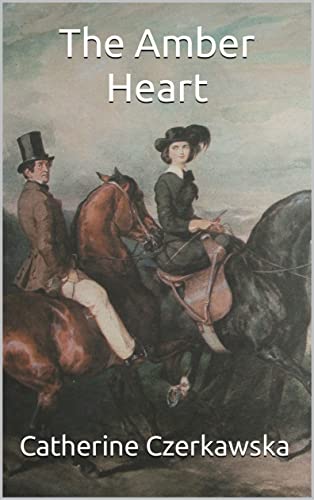
This story really belongs to my lovely late dad. With a different setting and date I've used it in a novel called The Amber Heart, which is available in eBook form, and is about to be published as a paperback. It formed a very useful background to a major turning point in the book.
But it happened to my father and my grandfather, Wladyslaw, when dad was just about the age in the picture above, so here it is.
Dad came from what was then Eastern Poland and is now Ukraine. He was born and spent his childhood on the family estate in a place called Dziedzilow, now Didyliv. You can look at the village on Google's street view and find that it isn't much changed. It's rural, rolling agricultural countryside. Winters were hard with plenty of snow, and the family used sleighs to get about. But this story happened in late autumn, when the hard frosts had started, but the snow hadn't yet fallen in any quantity.
The two of them were coming back from a visit to a neighbouring house, in a pony trap, a 'droshky' to use the English spelling of a Polish word. It was a very cold night, darkness had fallen, but there was a full moon. It must have been about 1933 or 34. Dad would have been seven or eight, and my grandfather, twenty nine or thirty. I never knew him, but I know that he was funny, warm, slightly autocratic, and definitely had a wild streak. I'm currently writing a new book about him called The Last Lancer.
They were passing a lonely field in which there were big heaps of manure, left there for the frosts of winter to break them up, when in the moonlight, they spotted what can only be described as a creature, on the other side of the field. It was child sized, dad said, but somehow it didn't have the look of a child.
Not at all.
Wladyslaw drew the trap to a halt and they watched, fascinated. The creature was leaping up onto each heap of manure and - as my dad described it - bending backwards and forwards like a coiled spring. He said it looked like an impossible contortion. Worse, as it bent backwards, it cried out 'hehee!' and as it bent forwards, it called 'hahaa!'. The sound, comical and sinister at the same time, echoed through the night.
Wladyslaw - and this seems like exactly the kind of thing the man I have come to know and love would have done - stood up in his seat, cupped his hands, and shouted 'hehee, hahaa' in the general direction of the creature.
It heard. It paused and turned its head in their direction. It looked, said my dad later, horribly grotesque and uncanny. Especially when it began to head rapidly towards them, leaping on manure heaps, coiling and uncoiling itself as it came.
'What happened?' I asked.
'My father sat down, whipped up the horse and we never stopped or looked back till we were safe and sound at home,' he said, with a grin.
Nothing followed them. My dad was a scientist who didn't really believe in the supernatural. But he remembered exactly what they had seen, and could never find a wholly satisfactory explanation. Can you?
![]() |
| The Glebe in spring |
Since I publish most of my fiction on paper, as well as in eBook form, it feels a bit heretical to write this, but I read pretty much all of the fiction I read purely for pleasure on my Kindle these days. It's an old, bog standard Paperwhite and it has been going for years now. It is a bit slower than it once was, although switching it on and off again tends to remedy that, but I'm considering asking for a new one for Christmas.
I don't want anything too complicated though. An upgrade of this one will be fine. I don't really want to browse the internet or get onto social media while I'm reading. In fact it's one of the big attractions of my old Kindle that I can't do that. I can, of course, download a new book as soon as I've finished the most recent one, which is very handy when it comes to those series you gallop through voraciously, desperate to start the next one. Fred Vargas and her brilliant Commissaire Adamsberg novels, for example. I can look up words and even place names, which comes in handy. And I can take and save notes and juggle with the settings to suit myself. But that's really all I need.
I do a lot of my fiction reading late at night. I'm something of an insomniac. I can wake up at 4am, so wide awake that I know it will be impossible to go back to sleep. That's when I pick up my Kindle, set its light very low, and read for an hour or two before eventually falling asleep, and all this without waking my slumbering husband. Not only that but the Kindle will quietly switch itself off when I fall asleep, and it will keep my place for me. Although it does sometimes slide off the bed and wake me up again when it lands with a thud on the carpet.
But all this involves practical details, and my love for my Kindle involves far more than that. Years ago, when radio drama was in its heyday, somebody pointed out that they loved listening to plays on radio because the pictures were better. And I love reading on my Kindle, especially in the dark, in the middle of the night, because the pictures are definitely better.
One of the complaints made about eBooks (especially from people with a vested interest in selling paper books, oddly enough) is that people don't remember what they read on an e-reader. I find that the opposite is true. Although I'd admit that it depends on the quality of the book. NVG fiction will just slide away from you, but NVG fiction on paper will do the same thing.
There is something magical about entering the world of a good book in the middle of the night, in the dark, just you and the words and the world that the writer has created. The pictures are so much better. Sometimes, a book can be so entrancing that I find myself falling asleep and continuing the story in my dreams. You should try it. It's magic.
These are Golden Noble apples from the very old tree at the bottom of our garden. They're cooking apples, but much sweeter than Bramleys, so you don't need to add much sugar. The tree is so old that it's now on a two year cycle. It has a massive crop one year, and then rests up and has only a few the following year. The variety is old as well. As they ripen and mature, they turn a lovely golden colour.
This year was an apple year. We have made apple pies, apple crumbles and apple scones. We've frozen some for winter. We've given a lot of them away to friends. You're not allowed to leave the house without taking some apples. We've given the small windfalls to a friend with horses - they love them, seemingly. We don't spray the tree, so there are no chemicals on them. The wasps have had a good go at the remaining windfalls, and the birds are doing the same thing.
Now, most of them are gone, winter's on its way and I'm going to cook the last few. This isn't my favourite time of year. I love the colours that I can see from the window of the room where I work, but I hate the fading light, the way the nights draw in. The only positive thing is that it's easier to batten down the hatches and write. This year, in the sad old UK, with our energy prices rising to crazy levels, I'll be writing all wrapped up in woollies and socks and blankets, and hoping for a less chilly winter. I've got my fiction to keep me warm.
Meanwhile, I make my scones with about 500 grams of self raising flour, a couple of teaspoons of baking powder, a walnut sized lump of butter rubbed in, as many peeled apples as you like chopped into the mixture (lots) and a tablespoonful of sugar. I mix them with home made kefir, but if you haven't got that, buttermilk, or a big dollop of Greek yoghurt mixed with milk, or sour milk - all these will do. I like to add some vanilla essence, but you might prefer cinnamon. Your scone dough should be very soft - just not quite sticky. Better sticky than too dry though. Form into two rounds on a well greased baking tray, make a cross in the middle so that you can pull them apart later, and bake in a medium to hot oven, (about 200C) until well risen, and cooked all through. If you're baking them in big rounds like this, it's about half an hour. If you're making nice little scones, it'll be more like 15 minutes. Cool on a baking tray and eat while they're still warm with lots of butter. They freeze well too.
All my writing life, people have been giving me advice. Some of it was solicited, and some of it wasn't. Some was useful and some wasn't. I once asked an established artist friend if people routinely told her that she ought to make drastic changes to her work, and she looked at me as though I had gone mad. 'No' she said. 'No, they don't!'
I don't mean skilled editing. A good editor can help you to see the whole wood when you're obsessing about individual trees. I mean the person who tells you to turn your book into the kind of book they would have written themselves, if only they could write. Two different people once told me to cut a third of a novel. The trouble was that one wanted me to cut the first third and one wanted me to cut the last third.
Neither of them was right, although the book in question certainly needed a lot of pruning. In fact when I did prune it, here there and everywhere, I probably deleted just as much as they had been recommending. But they had gone for the easy option which said more about them than it did about the book.
Beta Readers worry me. I don't have them, but I worry about other people's reliance on them. Most (although not all) writers want to be read. We're in the business of communicating. And we often have some hypothetical reader in mind. But most of the time, we're writing the kind of book we want to read ourselves, telling the stories that gnaw at us till we put them into words, the ideas we feel passionate about.
Which is why when somebody says 'I've got this great idea for a book!' our hearts sink. We may smile politely, but what we're really thinking is, 'well go and write it then.' Other people's ideas for books are just like other people's dreams. Only our own are interesting to us. We may like to chat to our readers once the book is published. I know I do. We may like to hear from them, and answer questions and even debate with them. But I don't want any random reader critiquing my work before the event.
Which leads me, in this rambling post, to note that I've just finished reading Kingfishers Catch Fire and I'm wondering as I do with all her novels, why it has taken me so long to discover Rumer Godden's work. Why didn't it feature as part of my course work all those years ago when I did a degree in English Language and Literature and when the first two years consisted of a quick gallop through 'the canon'. Mind you, the canon was mostly male, dead and English (even in Edinburgh) so it isn't too surprising.
If you haven't read it, do. Immediately. It's magical. And very relevant indeed at a time when, as the Covid threat begins to recede a bit, so many people seem to be deciding to move to rural communities in order to 'find themselves' and finding mostly that they don't know how to live in rural communities. Or they make television programmes about 'finding themselves' in rural communities where people have already found themselves, thank-you very much.
Godden tells wonderful tales. And that brings me back to the thorny problem of advice. I'd lay bets that if a beta reader had got their hands on Godden's extraordinary work they would have told her everything that was wrong with it, just because it is so strange and so different from anything they might have read before.
Then it struck me that the one piece of advice I wish somebody, anybody, had given me when I was just starting out, was this: Tell your story and tell it well. But first and foremost tell it for yourself. If you're bored with it, everyone else will be. If you're engrossed in it, passionate about it, and if you truly know what you're writing about, there will certainly be somebody out there who loves it too.
![]() |
| My novel with a male narrator |
There were a few dead giveaways.
Someone neatly summarised them as (1) female protagonist young enough to be ugly male protagonist's daughter or grand-daughter, but still fancies him. Instantly. Hops into bed with him at the first opportunity. (2) Female protagonist has no idea how beautiful she is. (3) Answers her door wearing next to nothing.(4) Gazes at herself in the mirror and (5) Always, always fondles her boobs.
Even more accurately summed up as 'she breasted boobily down the stairs'. Young women, as written by men seem curiously aware of, not to say obsessed with, their own chests. Also, they absentmindedly caress them with the back of their hands. Not easy. Try it. There are many examples, and male critics never notice.
Mind you, the other dead giveaway is when the female protagonist casually puts her hands in her pockets. I put a perfectly good pair of trousers in the charity shop bag only the other day, because it had the abomination that is MOCK POCKETS. Sometimes the pockets are only stitched up. I had a jacket like this for about a year before I realised that it really did have beautiful, useful deep pockets - once I had unpicked the stitches!
A few things occurred to me about all this though.
It works the other way. When I read a book by Fred Vargas, my best discovery of lockdown, thanks to a recommendation from a friend, my first thought was - wow, what an interesting and perceptive writer this is. What believable characters. Then, I realised that Fred is female. I began in the middle of the series with The Ghost Riders of Ordebec. There is one particularly wonderful passage in one of the later novels where a big, brilliant female character hides the hero in a very unusual way. You'll know it when you read it.
Do men feel the same about these novels? Do they read them without a second thought assuming that Fred is male? Does that predispose them to enjoy them? I have no answers to these questions.
All I know is, I read more fiction by women than by men these days. There are plenty of exceptions. I think Winston Graham writes absolutely believable female characters for instance. But my tendency is always to enjoy female fiction more. I can't help it. Recently, seeking to escape from the doomscrolling and the gratuitous violence, I went back to Mary Stewart and Rumer Godden for the sheer pleasure, the recognition, the comfort of the female perspective. It's why I love Barbara Pym too. And Jane Austen. And the Brontes.
You do, though, as a writer, start to wonder if you're writing believable men yourself. I wrote a whole novel in the voice of an elderly Scottish narrator remembering his youth in late 1700s Glasgow. (The Physic Garden) I think he was credible. But how would I know? He was a grumpy old bugger, and I liked him a lot.
If men won't read books by women, and women don't much like books by men, where does that leave any of us?
It's no secret that I love Ayrshire. We moved from Leeds, years ago, when I was twelve, and my biochemist father got a job in a research institute here. I never enjoyed school much, even though I did quite well academically - but I adored the countryside and history of this lush, green and, let's face it, rainy county. If you can put up with the rain, it's considerably warmer than the rest of Scotland, and warmer than much of Northern England. Winters are much milder than in my native Leeds.
Holidaymakers tend to pass it by in the mad rush for the Highlands, but the scenery is spectacular and the history is fascinating. Not surprisingly then, it has featured in at least some of my fiction, in novels such as The Jewel and Ice Dancing, as well as in many of the radio plays I used to write, notably a couple of series: The Peggers and the Creelers and Running Before the Wind. I'm planning a new series of novels even as I write this, and guess where they are mostly going to be set?
I was happy to be asked to record a reading for this year's Tidelines Festival and chose a passage from the Jewel, about an early encounter between our very own Robert Burns and the woman who was destined to become his wife, and who was quite clearly the love of his life: Jean Armour. I didn't much want to record myself just sitting on a rock reading and my tech skills weren't up to recording myself walking and reading on a smartphone - so I included a sheaf of my own pictures of Ayrshire, as well as some lovely watercolour images from a Victorian artist called Janet Muir, who lived in Mauchline. Nice to see that the person putting the video together worked a bit of magic on them all.
Anyway - here it is. Grab yourself a cup of coffee and watch the whole Love Ayrshire video. You'll find me, and a sheaf of other Ayrshire writers too.
![]() |
Straight from the horse's mouth! |
I still, occasionally, review a book on Amazon, but only if I've liked it or at the very least appreciated something about it. Then, I can honestly say nice things about it. The better the book, the more I enjoy trying to analyse why I've liked it so much. If I've hated it, or read 50 pages on my Kindle and asked for my money back - as I've done a few times - I won't review it at all, even though I will be pretty certain about why I've disliked it.
We all get bad reviews from time to time. Sadly, a single bad review will stick in our minds and keep us awake being indignant for far longer than ten good ones. I don't mean mixed reviews, or thoughtful reviews that analyse a piece of work on its own terms. Those can be incredibly helpful. It means somebody is taking us seriously, debating with the piece of work, if you like. But they don't have to like everything about it.
I mean those one star, bald and bold 'I hated this' kind of reviews that you look at and wonder if they've actually read the book, or seen the play or film.
One of the wisest things somebody wrote about these occasional terrible reviews was to try not to take them to heart, but to simply imagine yourself saying to the reviewer, preferably with a shrug, 'then it's not for you. And that's fine.' And then mentally walk away.
You have to practise doing it, but honestly, it works.
Social media, however, seems to have encouraged the phenomenon of the superior spoilsport, especially where a popular book or film or TV show is concerned.
Here's how it goes.
A group of people will be on, say, Facebook, happily discussing something they've enjoyed. Let's avoid getting embroiled in book critiques by using an example from the world of music. I've seen it happening twice recently, once with Abba and once with the Beatles. In both cases, people were having a good time sharing what these bands and their music meant to them, debating songs and memories, disagreeing a little, but enjoying the chat no end.
And then along comes somebody who posts 'I hate Abba.' Or 'The Beatles were rubbish.'
I wouldn't mind if they ever gave a valid reason why they think this. But they hardly ever do. I can give you dozens of reasons why I love the Beatles, and Abba too. Some of them are extremely personal, but some of them are to do with my appreciation of the music itself. If you try to pin them down, ask them why they think this - which they're perfectly entitled to do - they just dig their heels in. 'I hate them because they're rubbish' they say. Which doesn't make a lot of sense.
There have been a couple of widely praised TV shows that I've disliked recently, but I know why, would be happy to say so, and equally happy to acknowledge that this may be down to me, and not necessarily a fault of the programme itself, which I know other people have enjoyed. If pushed, I could analyse this further, point out faults in the writing and direction. But in my experience, you can forgive a whole lot of faults if you find something entertaining.
I've encountered the spoilsports so often now, that I'm forced to the conclusion that there's a kind of superiority about it. They don't ever want to be seen appreciating something that lots of other people like. So they'll pretend that they, and only they can see through it.
They are spoilsports. What I really want to say to them is just leave us to our enjoyment. It's not for you, and that's fine. But you don't have to be here right now, telling us how much you loathe the thing we love. We don't care. It's not going to change our opinion.
So just for once, go play on your own page, write an online one star review if you like -but leave us alone to wallow in our fandom.
1: I would never want to deter new writers from going down the traditional route, or trying to. Once you've got a good portfolio of work under your belt, there's no harm in sending out query letters if that's what you want to do. Just don't be persuaded that an agent is the only way to publication. I've known people with fantastic agents, who have been instrumental in their success. I've known people who have got onboard with agents in the wake of success. And I've known plenty of people who have secured the services of an agent, only to realise that they spend too much time writing to the demands of their agent, who is often looking to predicate the next big success in terms of the last big success.
2: In the interests of balance, remember that agents and publishers all get horrible submissions all the time. Not just bad writing, but badly presented bad writing. Cobwebby documents that have sat in folders for years. Manuscripts printed out on two sides of pink paper, with single line spacing and coffee rings all over them. Entitled authors who want an immediate response and don't like it when they get it. So DO have a little patience and respect and - above all things - professionalism.
3: Back when I was starting out on this long hard road, a good agent didn't expect to edit. That was the job of the publisher. If the manuscript was good enough, then the donkey work would be done between writer and publisher's editor, with some payment changing hands in advance, facilitated by the agent. This is not the way it works now.
4: Now, the publisher expects the agent to submit an 'oven ready product' so in general, your agent is going to keep telling you to go back to the drawing board, in an effort to second guess the publisher and the 'market'. But those requirements will change over the course of the time it takes you to do rewrites. Also, many big publishers seem to have an informal 'three strikes and you're out' policy, so if an agent has three (possibly fewer now) projects by the same author turned down, they won't look at a fourth. To prevent this, the agent may keep sending you back to the drawing board. And this may mean that you finish up with several projects that you like and can self publish. (Like the nicely reviewed Ice Dancing above!) On the other hand, it can mean that you get stuck rewriting the same book over and over again.
5: Finally, read Stephen King's On Writing. Best 'how to' book ever, although it's more of a memoir than anything else. Briefly, his advice is to read a lot and write a lot. I couldn't agree more.